
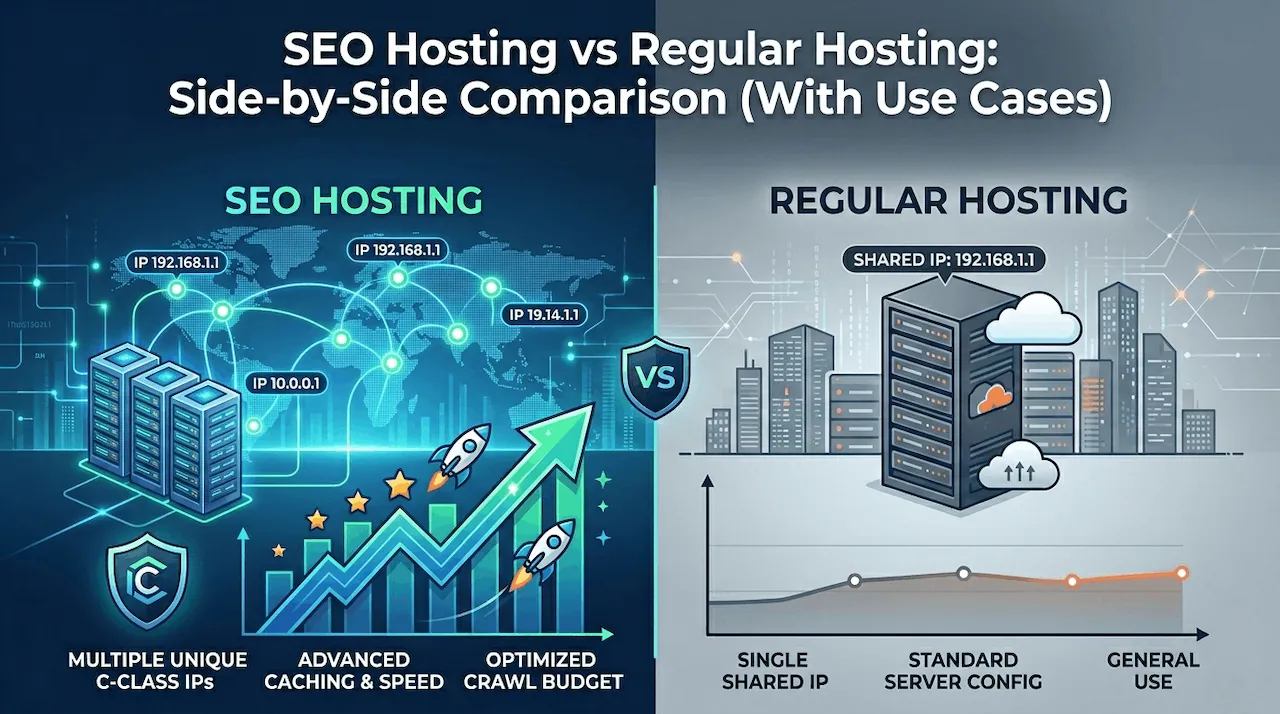
Choosing the right server infrastructure is one of the most critical decisions an online business can make. For companies trying to capture organic search traffic, this choice goes far deeper than just picking a plan that keeps a site online. It directly impacts your bottom line. When evaluating server architectures, the core debate often comes down to analyzing seo hosting vs regular hosting configurations.
While standard server setups are built to serve general data efficiently, specialized hosting environments provide unique networking configurations engineered to maximize organic visibility. This comprehensive comparison, curated by the senior engineering team at CoHosta, breaks down the core structural differences, key technical indicators, and distinct use cases to help you choose the ideal system for your business.
What Is the Difference Between SEO Hosting and Regular Hosting?
To understand how these architectures function, we must look at how search engines crawl and evaluate web properties. The fundamental difference lies in asset insulation, IP addressing, and performance tuning.
SEO hosting is a specialized infrastructure that provides a single website or a portfolio of sites with multiple, unique Class C IP addresses across distinct data centers, paired with advanced optimization tools designed specifically to boost crawl efficiency and search rankings. Conversely, regular hosting houses one or multiple websites on a single server or cloud cluster, sharing a single IP address and standard network routing configurations.
The Architecture of IP Diversity
In standard shared environments, hundreds of sites utilize the exact same IP address. If a neighbor on that server engages in black-hat techniques or gets blacklisted, your digital footprint risks sharing that negative reputation. A specialized platform for hosting for seo breaks this bottleneck by assigning distinct, isolated IP blocks (A-class, B-class, and C-class blocks) to your domains. This prevents search engines from penalizing your entire portfolio due to structural footprint overlapping.
Performance Indicators: Speed, Infrastructure, and Availability
Search engines like Google demand flawless site execution. Core Web Vitals are core ranking factors, meaning your underlying server software directly dictates your position on search engine results pages (SERPs).
Fast Hosting and Core Web Vitals
A standard hosting account often throttles resources during traffic spikes on neighboring sites. When you deploy specialized, SEO optimized hosting, you gain dedicated resources, server-side caching (such as LiteSpeed or Redis), and advanced HTTP/3 protocols. This guarantees an ultra-low Time to First Byte (TTFB), delivering the fast hosting speeds required to clear Google’s strict Core Web Vitals thresholds.
Uptime Reliability and Crawl Budgets
If a search engine bot visits your site and encounters a 503 error, your crawl budget is wasted, and your rankings will suffer. Continuous uptime is non-negotiable. Enterprise-grade architectures utilize redundant cloud failovers to achieve true 99.99% availability, ensuring that both human visitors and automated search crawlers can navigate your content without interruption.
| Technical Feature | Regular Hosting | SEO Optimized Hosting |
|---|---|---|
| IP Address Assignment | Single shared IP or single dedicated IP. | Multiple unique Class-C IPs across diverse subnets. |
| Resource Management | Shared bandwidth and CPU throttling. | Isolated, dedicated resources with advanced server caching. |
| Crawl Optimization | Standard routing; no specialized botanical control. | Optimized server headers and rapid TTFB to maximize crawl budget. |
| Footprint Mitigation | High risk of cross-site bad neighbor contamination. | Total network isolation across independent server nodes. |
Strategic Use Cases: Matching Infrastructure to Your Business Goals
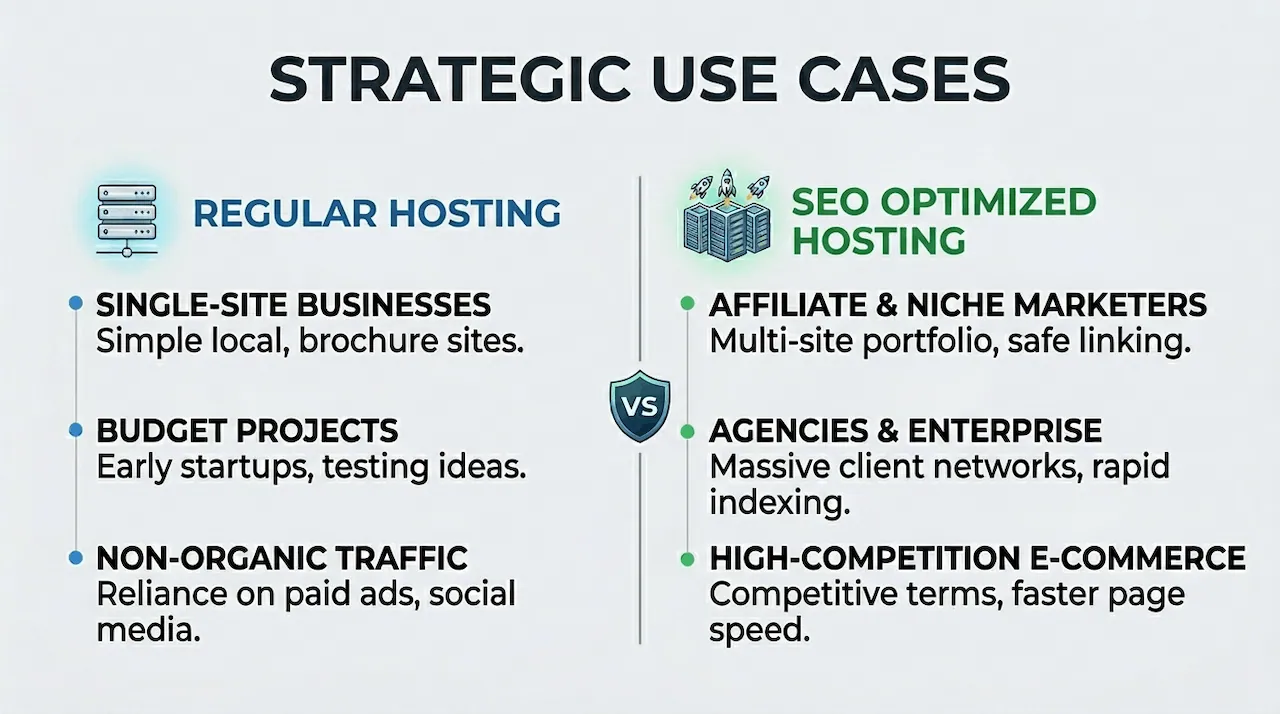
Neither architecture is a one-size-fits-all solution. Your choice depends heavily on your corporate scale, digital strategy, and technical dependencies.
When to Deploy Regular Hosting
- Single-Site Businesses: Small local service providers or corporate brochure sites that do not rely heavily on aggressive organic keyword campaigns.
- Strictly Budget-Driven Projects: Early-stage startups testing an idea where low initial operational costs outweigh advanced technical advantages.
- Non-Organic Traffic Models: Organizations that drive the majority of their revenue through paid ads, social media campaigns, or direct email marketing.
When to Deploy SEO Optimized Hosting
- Affiliate and Niche Marketers: Professionals running multi-site portfolios that need completely independent network footprints to safely link and build authority.
- Agencies and Enterprise Lead Generation: Digital agencies managing massive client networks that require rapid indexing and ironclad security across different geographic regions.
- High-Competition E-commerce Platforms: Online retailers fighting for competitive high-volume search terms where millisecond differences in page speed determine page-one placements.
“Because page speed is crucial to user experience, Google uses page load time in its ranking algorithms.”
How to Seamlessly Upgrade Your Server Architecture
If your business outgrows your entry-level shared server, migrating your data might seem daunting. However, changing hosts does not have to result in lost rankings or missing databases. Utilizing a professional, white-glove website transfer service ensures that your files, configurations, and internal linkages are preserved perfectly during the migration window, preventing any drop in search visibility.
When selecting your next platform, look for providers that comply with open systems architectures. Industry analysis from leading authorities shows that modern web masters prioritize software flexibility alongside hardware reliability. According to global infrastructure reports published by W3Techs, open-source server software and agile content ecosystems continue to drive the vast majority of top-tier enterprise deployments, emphasizing the importance of choosing a host that integrates seamlessly with your existing software stack.
Final Verdict: Maximizing Organic ROI
Standard servers are perfectly adequate for maintaining an online presence. However, when organic rankings directly drive your corporate revenue, specialized network configurations become essential. Investing in optimized infrastructure gives your business the ultimate competitive edge: ultra-fast delivery, robust network diversity, and consistent indexing efficiency.
Ready to unlock the true potential of your digital portfolio? Explore high-performance infrastructure solutions tailored for competitive markets with CoHosta today.
According to extensive user behavior surveys published by HostAdvice, web performance is a critical driver for online success. Their data confirms that 47% of users expect a webpage to load in 2 seconds or less, illustrating how vital specialized server optimization is for keeping bounce rates low and maximizing organic search visibility. Source: HostAdvice Global Web Hosting Trends