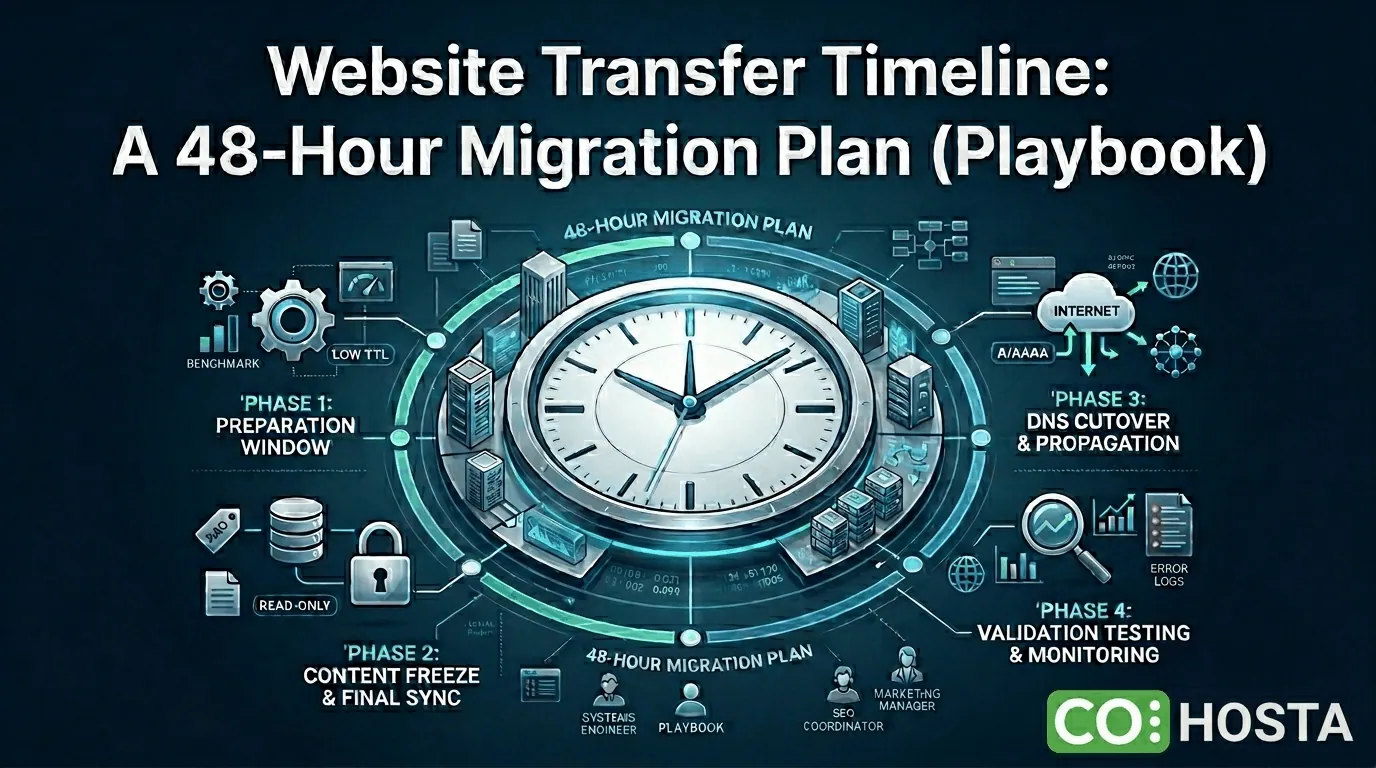
Migrating a live digital asset to a higher-performance environment is one of the most critical operations an engineering or marketing team can undertake. Without a rigorous framework, moving production databases, file systems, and configuration profiles introduces risks of data corruption, severe SEO drops, and extended operational outages. Utilizing a structured website transfer timeline prevents spontaneous decision making, keeping technical operations perfectly aligned during a high-stakes transition.
Executing a flawless website transfer timeline requires moving beyond guesswork and treating infrastructure deployment as a precise, phase-based discipline. This operational playbook establishes a strict, 48-hour schedule designed to preserve data integrity, secure search equity, and maintain completely uninterrupted uptime for your users.
What is a zero downtime website transfer timeline?
A zero downtime website transfer timeline is a structured execution protocol that maps out data synchronization, server propagation, and configuration testing over a controlled window. By staging assets before altering network routing, businesses ensure user interaction remains completely uninterrupted during an infrastructure transition.
Phase 1: The Preparation Window (T-Minus 24 Hours)
A successful platform transition begins long before any records are altered. The 24 hours leading up to the migration are dedicated to baseline benchmarking, absolute environment parity checking, and modifying network settings to allow for near-instant network routing updates later in the process.
Auditing Core Infrastructure and Lowering Domain TTL Settings
Before initiating a major site transfer, engineers must establish a complete inventory of existing assets, including active database sizes, server-side cron jobs, custom mail server configurations, and third-party API dependencies. Simultaneously, the administrator must log into the authoritative domain management system to adjust the Time to Live (TTL) values on all relevant zone records.
Lowering the TTL to 300 seconds ensures that when the final infrastructure switch occurs, internet service providers worldwide will recognize the updated destination almost instantly, minimizing legacy caching windows. Skipping this preliminary step is the leading cause of extended, unpredictable propagation delays that leave users hanging between old and new environments.
Phase 2: The Content Freeze and Final Database Sync (Hours 0 to 12)
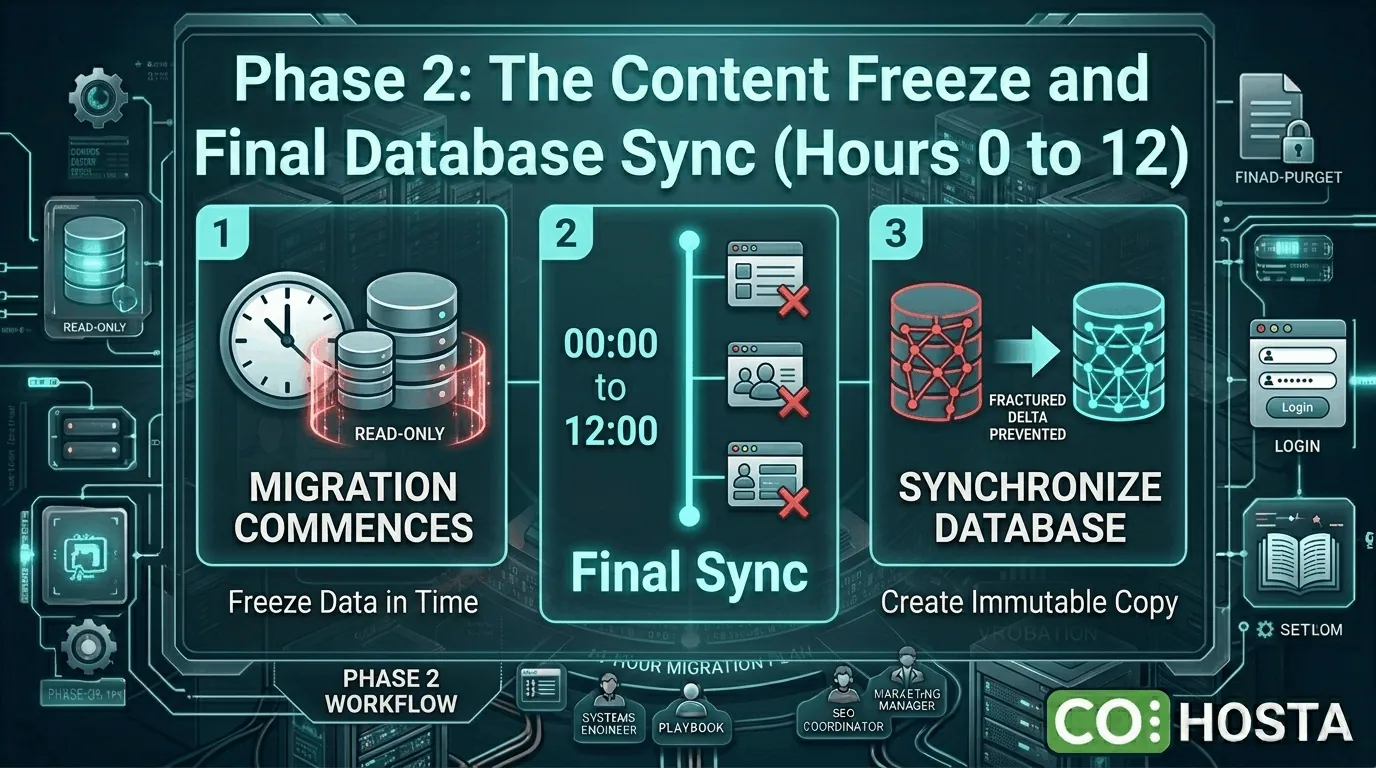
Once the baseline setup is secure, the operational window opens with the strict implementation of a content freeze. This step halts any administrative modifications, new user registrations, or customer data entries on the legacy environment to prevent the creation of fractured data deltas.
Executing a Controlled WordPress Site Migration Without Data Loss
For transactional systems, executing a safe wordpress site migration means putting the active system into a read-only or maintenance configuration. Engineers pull a clean, immutable backup of the database alongside the complete physical file structure, transferring those encrypted assets directly to the new target host.
By unpacking these files within an exact duplicate configuration layer on the destination side, developers can perform comprehensive quality control loops prior to changing public traffic channels. Keeping the old environment completely live but frozen ensures that no transactional records disappear during transit.
A website migration is not just a technical change; it is a moment when Google must completely reinterpret a site: its URLs, structure, authority, and relevance. If the process is not managed correctly from an SEO perspective, issues such as the loss of authority built over years may occur.
Phase 3: The Critical DNS Cutover and Network Propagation (Hours 12 to 24)
With data staging completed and validated on the destination framework, the playbook advances to the actual infrastructure shift. This is the precise moment when the public internet is redirected from the legacy server infrastructure to the optimized target destination.
Executing the DNS Cutover with Zero Traffic Disruption
The dns cutover is performed by modifying the primary A and AAAA records within your domain name zone file to point directly to the public IP address of the new platform. Because TTL configurations were systematically lowered during Phase 1, inbound user traffic naturally routes to the new architecture within minutes.
Engineers track the global routing transition using specialized resolution diagnostics across varied international caching nodes. Throughout this shift, the legacy server must remain completely active, serving static cached pages to any delayed users whose internet providers are slower to refresh local records.
Phase 4: Thorough Validation Testing and Post-Launch Monitoring (Hours 24 to 48)
The final 24 hours of the deployment playbook are strictly allocated to extensive operational validation and automated system profiling. The transition is never considered complete until the new system passes rigorous functional and performance stress tests.
Post-Launch Architectural Analysis and Error Log Auditing
System architects execute a comprehensive crawl of the newly launched domain to confirm that all internal links remain perfectly intact, file permissions are structurally sound, and global content delivery network assets are distributing correctly. Teams verify that transactional workflows, email forms, payment processor connections, and user login endpoints are operating properly under the new host infrastructure.
Simultaneously, developers actively monitor real-time server error logs to identify and resolve any latent PHP or database version incompatibilities before they impact customer conversion metrics or bounce rates.
Establishing a Reliable Infrastructure Rollback Strategy
Even the most meticulously structured website migration plan must incorporate an unambiguous fail-safe. A rollback strategy outlines the exact technical parameters that would trigger an immediate reversal to the legacy host environment if an unresolvable server failure manifests post-launch.
If critical, consumer-facing application nodes break down and cannot be successfully patched within a predetermined target window, system administrators quickly revert the primary network zone files back to the old, preserved server IP addresses. Having this clear fallback mechanism protects the business from compounding financial losses and long-term brand damage while engineering groups isolate complex system bugs in isolation.
The Essential Website Migration Plan Stakeholder Checklist
To keep distinct corporate departments synchronized across the 48-hour technical deployment window, teams can deploy this clean accountability matrix:
| Stakeholder Role | Core Phase Task | Verification Target |
|---|---|---|
| Systems Engineers | Adjust zone TTL configurations and stage database repositories. | Confirm environment parity and storage sync. |
| Marketing Managers | Freeze dynamic web publishing schedules and ad campaigns. | Prevent administrative content delta generation. |
| SEO Coordinators | Audit canonical configurations, status codes, and tracking tags. | Preserve organic placement and indexability status. |
Secure Your Digital Transition with an Expert Enterprise Team
Navigating the intricate data mappings, database permissions, and precise network timings required for a seamless server migration demands specialized engineering expertise. Attempting a manual platform shift without enterprise-grade monitoring frequently results in avoidable site errors, broken URL structures, and prolonged operational downtime.
Partnering with seasoned web specialists removes the operational friction from infrastructure transitions. Trust our senior systems engineering group to manage your next complex infrastructure deployment with absolute precision by consulting with the elite technical specialists at CoHosta today. See our WordPress migration service for how that engagement runs.
Critical Migration Risk Stat: According to a comprehensive data analysis from Swell, poorly executed infrastructure changes carry immense financial risk, with chaotic transitions frequently causing up to a 30% decline in organic traffic and over a 50% drop in digital revenue for up to three consecutive months.
Source: Swell Platform Analysis